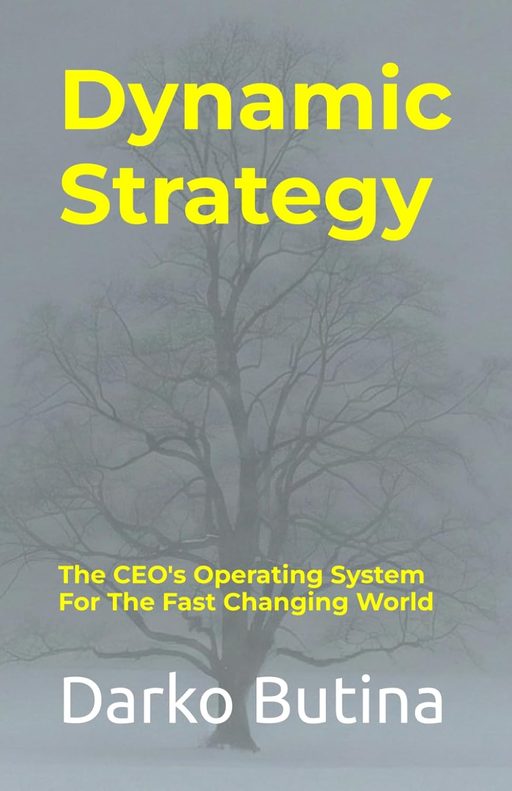
Dynamic Strategy
Why a static strategy stops working in a market that changes faster than the annual planning cycle. The foundation this level is built on.
Most companies re-plan once a year and spend the other eleven months executing a decision the market has already moved past. Dynamic Strategy closes that loop, and now it closes it all the way down to the agents doing the work.
In most companies strategy runs on an annual rhythm. Planning starts six months before the fiscal year: an offsite, a deck, a board approval, a cascade. By the end of that year you are flying into a storm on an eighteen-month-old forecast.
The rhythm is not wrong. The cycle time is. Markets move faster than the calendar, departments drift apart, quarterly reviews report activity rather than progress, and the CEO ends up as the only person still holding the whole picture.
That is not a thinking problem or a people problem. A document cannot be executed, nobody can act on a seventy-page PDF, and it cannot move when the market does.
The companies that win from here run strategy as a system that updates, not as a document that ages.
Every alternative stops at 'build'. They produce a strategy and leave. The value is in closing the loop, because that is the part that keeps the strategy true.
Build
Your strategy, built from your company's real data and its real constraints. Clear choices, written so a person can act on them. Not a seventy-page document.
Cascade
Everyone understands where the company is going and why, from the leadership team to the newest hire. The strategy is only real once it has reached the people executing it.
Execute
Objectives, initiatives, owners and deadlines. Everyone knows what they are acting on this quarter, and the work is visible rather than reported.
Adapt
Signals from inside and outside the business flow back up. The strategy changes when the world changes, not when the calendar says it may.
This is what has changed since the books were written. Strategy adapting on its own was already valuable when the thing downstream was a person's quarterly objectives. When the thing downstream is a fleet of agents doing the work, it becomes something else entirely.
A signal arrives
The market moves, a number misses, a competitor changes something.
The strategy updates
Priorities and gaps are re-ranked against the new direction
Actions, owners and timing shift to match
The agent harnesses are recompiled from the new context
The agents start doing the newly right thing
The result feeds the next signal
The work has already changed
Without a replanning cycle, an offsite or a six-week reconfiguration project.
Strategy stops being something you write down and starts being something the company runs on.
When people execute the strategy, a stale plan is inefficient. People notice that the plan no longer matches reality and quietly correct for it, which is inefficient but survivable.
Agents do not do that. An agent executes what it was configured to execute, at volume, reliably, whether or not it is still the right thing. The faster and cheaper agents get, the more expensive a stale strategy becomes, because now the company is very efficiently doing work that stopped being worth doing.
So the thing that keeps the agents pointed at the right work is a strategy that updates, and a system that carries the update all the way down to the configuration the agents run on. Better agents do not fix it.
Agents will do the work. Someone has to check it is the right work. You can only check that if the company's direction is written down somewhere the machines can read.
The parts of the loop that stop being an annual event and become something the business has running all the time.
Internal and external signals watched continuously, rather than gathered in the weeks before a planning offsite.
How the strategy is actually being executed, visible as it happens rather than reported a quarter late.
Where the strategy, the operating model and today's capabilities fall short, kept current as both sides move.
What to change, given what the signals and the execution data now say. With the reasoning attached, so a person can disagree.
Action items and tasks re-ranked and re-timed as the direction shifts, instead of a plan that quietly goes stale.
The configuration and context the agents run on, recompiled from the current strategy rather than from the one that was true in January.
Dynamic Strategy is the level above transformation, and it is the direction the whole system is built toward. It is also the newest of the three, and the one where the least of the market has caught up.
We are not going to pretend it is a shrink-wrapped product with a hundred reference customers. The strategy loop is worked out in practice and in print, across three books. The part that is genuinely new is the last link, where a change in direction reaches the agent configuration without a person rebuilding it.
If that is interesting to you, the honest next step is a conversation rather than a purchase.
If you are not already running AI transformation across more than one workflow, this is not the level to start at. Start with one agent and thirty days.
Why a static strategy stops working in a market that changes faster than the annual planning cycle. The foundation this level is built on.
How leaders use AI to improve analysis and decisions while keeping accountability for the choices that matter.
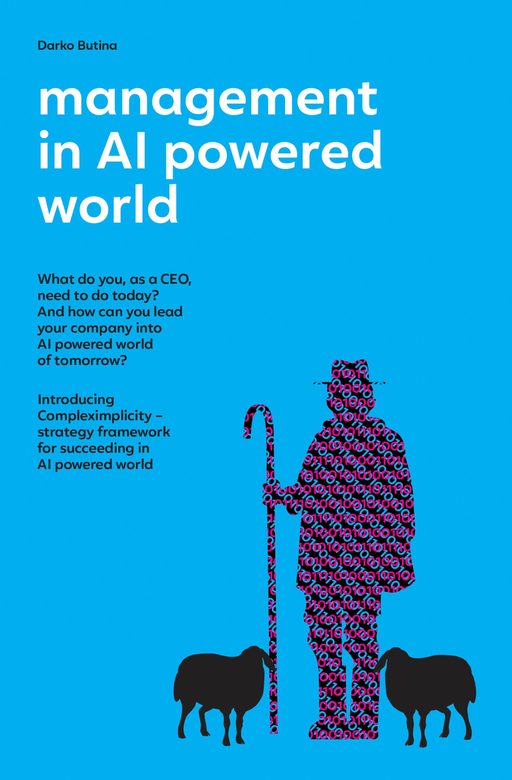
How leadership, management, work and organisational design change as AI becomes part of how companies operate.
No. Every recommendation comes with its reasoning attached, and a person decides. The choices a strategy is made of are exactly the choices that should stay with the people accountable for them.
What the system does is remove the excuses: it keeps the direction current, keeps the evidence attached to it, and makes sure the change reaches the work instead of stopping at a slide.
It is closer than annual planning, and it is a real improvement. The difference is what happens between the quarters.
A quarterly cycle still means the plan is on average six weeks out of date, and it still means a re-planning event rather than a running adjustment. It also does not touch the agent configuration, which is where the work actually happens once agents are doing it.
The strategy has to be in the platform rather than in a deck, the workflows in scope have to be redesigned and owned, and there has to be someone senior whose job it is to act on what the loop surfaces.
That is why this is level three. The two levels below it are how those conditions get built.
You can buy access to the platform and run the strategy loop on it. Plenty of value sits in that alone.
The last link, where a change in direction reaches the agent harnesses, only exists if there are governed agents to reach. That comes from the transformation work.
This one does not have a fixed price and a fixed date, and we are not going to invent one. Tell us where you are and we will tell you honestly whether this is your next step or your one after that.
45 minutes. You keep the map either way.
No preparation required. No commitment.